Issue #2: The Power of Small Shifts · Archived Issue
Free article
Seven Foods That Support Calm
By The Elemental Reset Editorial Team
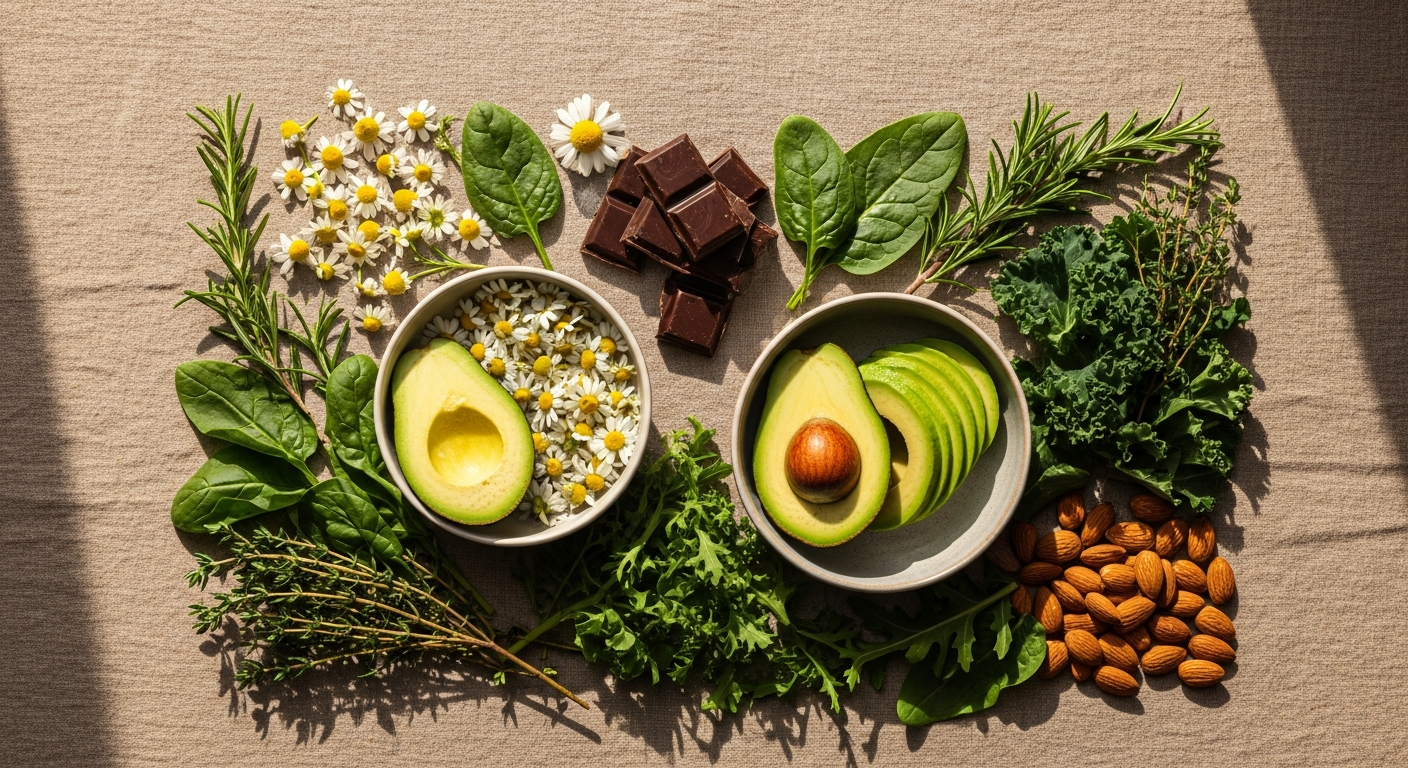
Seven simple, accessible foods associated with supporting the body's capacity for calm — no complicated protocol required.
<p style="font-size:1.2em;font-style:italic;line-height:1.8;color:#6B7280;margin-bottom:2rem;">You don't need a complicated protocol. These seven simple, accessible foods have been associated with supporting the body's capacity for calm — and you can find most of them at your nearest grocery store.</p>
<hr/>
<figure style="margin:2.5rem 0;border-radius:1rem;overflow:hidden;"><img src="/covers/issue-2-seven-foods-that-support-calm-body.png" alt="Beautiful flat lay of calming foods — blueberries, salmon, leafy greens, oats, chamomile" style="width:100%;display:block;object-fit:cover;"/></figure>
<p>The connection between what we eat and how we feel is not new information — but it is easy to forget in a world that has separated nutrition from wellness. The foods we eat influence our gut microbiome, our hormone balance, our blood sugar stability, our neurotransmitter production. What sits on our plate has a conversation with our nervous system, whether we are conscious of it or not.</p>
<p>This is not about a diet, a cleanse, or a complete overhaul. In the spirit of this month's small shifts — it is about seven simple foods worth adding more of to what you are already eating. Start with one. Notice what shifts.</p>
<hr/>
<h2>1. Pumpkin Seeds</h2>
<p>Small but mighty, pumpkin seeds are one of the most magnesium-dense foods available. Magnesium is a mineral involved in hundreds of processes in the body, including muscle relaxation, nervous system regulation, and sleep quality. Many people are not getting enough of it — and the effects of low magnesium can include muscle tension, restlessness, and difficulty winding down.</p>
<p>A small handful of pumpkin seeds as a snack, stirred into oatmeal, or scattered over a salad is an easy, everyday way to support your magnesium intake. Roasted with a pinch of sea salt, they are genuinely delicious.</p>
<h2>2. Salmon</h2>
<p>Fatty fish like salmon is one of the richest dietary sources of omega-3 fatty acids — particularly EPA and DHA, which play a role in brain health and have been associated with lower levels of inflammation and improved mood stability. The brain is largely composed of fat, and omega-3s are among the building blocks it most depends on for healthy function.</p>
<p>Aim for two servings of fatty fish per week if it suits your dietary preferences. Canned wild salmon is a more affordable option that retains much of the nutritional value of fresh.</p>
<h2>3. Blueberries</h2>
<p>Blueberries are one of the most antioxidant-rich foods commonly available. Their deep blue-purple pigment comes from compounds called anthocyanins, which have been associated with reduced oxidative stress in the brain and improved cognitive function. They also have a relatively gentle effect on blood sugar compared to many other fruits, which matters because blood sugar stability is closely linked to mood and emotional regulation.</p>
<p>Fresh or frozen, blueberries are equally nutritious. A cup in a morning smoothie or stirred into plain yogurt is a small shift with a genuinely good nutritional return.</p>
<h2>4. Leafy Greens</h2>
<p>Dark leafy greens — spinach, kale, Swiss chard, arugula — are among the most nutrient-dense foods available. They provide folate (which supports neurotransmitter synthesis), magnesium, and a broad range of vitamins that support nervous system function and overall resilience.</p>
<p>If leafy greens feel like a chore, try them in a different form: wilted into a soup, blended into a smoothie where you cannot taste them, or simply dressed very well as a salad. The preparation matters as much as the principle.</p>
<h2>5. Oats</h2>
<p>Oats are a slow-releasing carbohydrate, meaning they provide a steady source of energy without the spikes and drops that faster-digesting carbohydrates can cause. Blood sugar stability is a genuine contributor to emotional steadiness — the anxiety, irritability, and low mood that can follow a blood sugar crash are real physiological events, not personal weakness.</p>
<p>A bowl of oats in the morning — steel-cut or rolled, not instant — sets a stable metabolic tone for the hours that follow. Add protein (nuts, seeds, yogurt) to extend that stability further.</p>
<h2>6. Chamomile</h2>
<p>Chamomile has been used for centuries as a calming botanical. Modern research has begun to examine its effects more closely, with some studies suggesting it may support mild anxiety reduction and improved sleep onset. The evidence is gentle, not dramatic — but chamomile tea is safe, pleasant, and carries a ritual quality that is itself soothing.</p>
<p>A cup of chamomile tea in the evening — made slowly, held warmly, drunk without a screen — is a small shift that signals to the body that the day is winding down. The act of preparing it may be as valuable as the tea itself.</p>
<h2>7. Yogurt</h2>
<p>The gut-brain connection is one of the most fascinating areas of emerging research in health science. The gut contains an enormous community of microorganisms that communicate with the brain via the vagus nerve — and the balance of that community appears to influence mood, stress response, and mental clarity in ways researchers are still working to fully understand.</p>
<p>Fermented foods like plain yogurt (particularly those containing live active cultures) support gut microbiome diversity. Choose plain, unsweetened yogurt and add your own fruit or honey so you control the sugar content.</p>
<hr/>
<p>These seven foods are not a cure for anything. They are simply good company for a body that is working hard, navigating stress, and trying to find its way back to equilibrium. Add them slowly, consistently, and with kindness toward yourself.</p>
<p style="text-align:center;font-style:italic;font-size:1.1em;color:#C9A96E;letter-spacing:0.05em;margin-top:3rem;font-weight:600;">Shift Happens. Create Magic.</p>