Issue #3: Back to School. Back to Purpose. · Archived Issue
Free article
Muscle of the Month: The Gluteus Medius
Anatomy, function, dysfunction, and why this underappreciated stabilizer is central to how your entire body moves
By Dr. Constance Santego
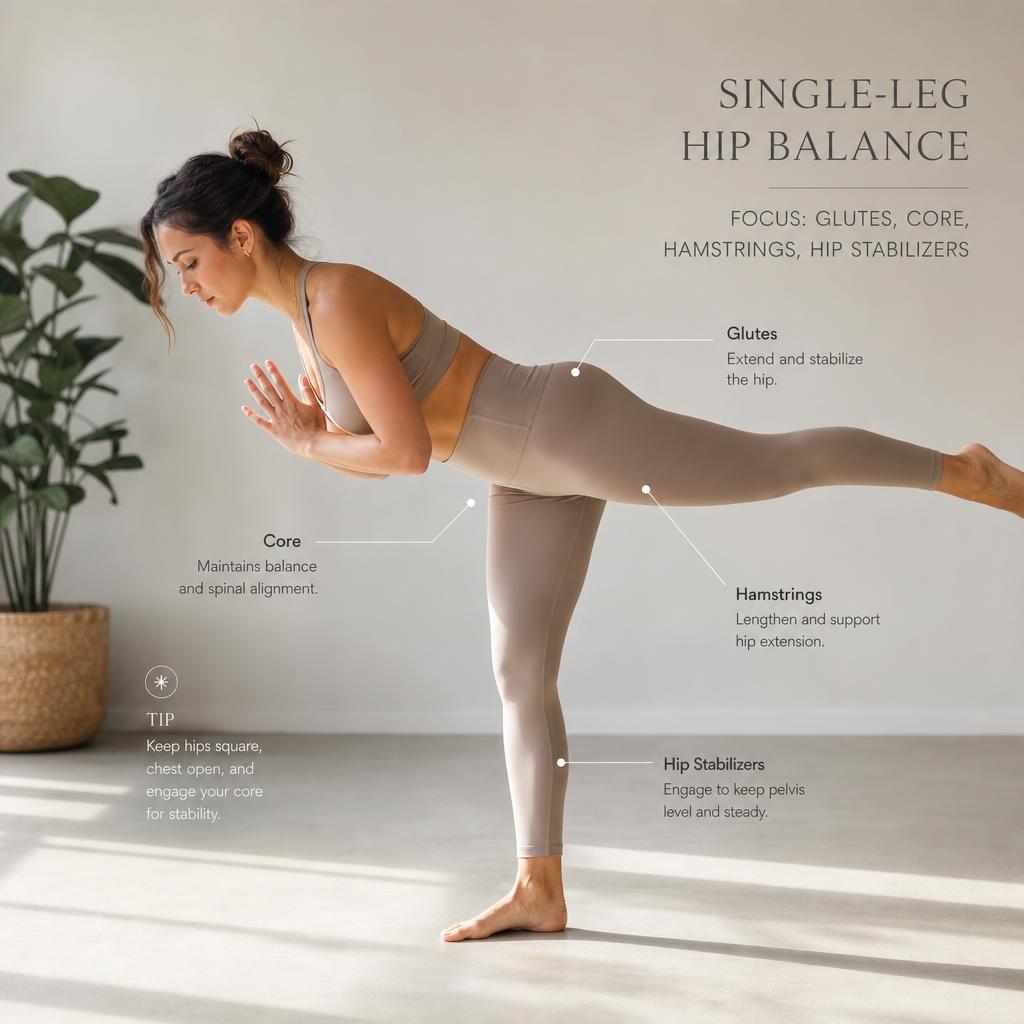
The gluteus medius rarely gets the attention the gluteus maximus does — but without it, every step you take would collapse your pelvis. This is your complete anatomy and clinical guide.
Ask most people to point to their glutes and they will gesture vaguely at their buttocks. Ask them to locate the gluteus medius specifically and the gesture becomes less confident. Yet this fan-shaped muscle — tucked between the iliac crest and the greater trochanter of the femur — is one of the most functionally critical muscles in the human body.
It stabilizes the pelvis during gait, supports single-leg stance, assists in hip abduction and internal rotation, and serves as a key contributor to lower extremity alignment. When it is weak or inhibited, the effects ripple upward through the lumbar spine and downward through the knee and ankle.
*⚕️ Educational disclaimer: This article is intended for students of anatomy, massage therapy, fitness, and allied health professions. It is not a substitute for professional assessment or clinical training. See full disclaimer below.*
## Classification and Location
**Classification:** Skeletal muscle; superficial layer of the gluteal region
**Region:** Posterior hip and lateral buttock
**Palpation landmark:** Fan out from just below the iliac crest on the lateral surface, posterior to the tensor fasciae latae. The muscle belly is accessible in the lateral gluteal region above and posterior to the greater trochanter.
<img src="/api/storage/objects/uploads/b309c58b-94d3-4a0c-802b-894e96332953" alt="Gluteus Medius anatomy diagram — posterior, lateral, and deep views" style="width:100%;max-width:800px;display:block;margin:1.5rem auto;border-radius:8px;" />
---
## Attachments
**Origin:**
- External surface of the ilium between the posterior gluteal line and the anterior gluteal line (the broad fan-shaped origin occupies a large surface area of the iliac wing)
- Some fibers also arise from the gluteal aponeurosis
**Insertion:**
- Lateral surface of the greater trochanter of the femur
- The posterior fibers insert more superiorly on the greater trochanter; anterior fibers insert more anteriorly
---
## Actions
The gluteus medius is a multi-directional muscle with distinct fiber groups that allow varied and sometimes opposing actions:
**Hip Abduction** *(primary action — all fibers)*
The gluteus medius is the primary hip abductor, working with the gluteus minimus and tensor fasciae latae to move the lower extremity away from the midline.
**Pelvic Stabilization in the Frontal Plane** *(primary stabilizing action — all fibers)*
During single-leg stance and gait, the gluteus medius on the stance limb contracts eccentrically to prevent the contralateral pelvis from dropping. This is the Trendelenburg stabilization mechanism.
**Hip Internal Rotation** *(anterior fibers)*
The anterior fiber bundle assists with medial rotation of the hip when the hip is in a neutral or extended position.
**Hip External Rotation** *(posterior fibers)*
The posterior fiber bundle assists with lateral rotation of the hip, particularly in hip-flexed positions.
**Hip Flexion Assistance** *(anterior fibers)*
The anterior fibers have a minor hip flexion vector when the hip is extended.
---
## Innervation and Blood Supply
**Nerve supply:** Superior gluteal nerve (L4, L5, S1)
**Arterial supply:** Superior gluteal artery (from the internal iliac artery), with additional contribution from the lateral circumflex femoral artery
---
## Physiological Characteristics
The gluteus medius contains a mixed fiber composition:
- **Type I (slow-twitch)** fibers predominate in the deep, posterior portion — suited for sustained postural stabilization
- **Type II (fast-twitch)** fibers are more prominent in the superficial, anterior portion — suited for power-generating abduction movements
This mixed composition reflects the muscle's dual role: sustained anti-gravity stabilization throughout the gait cycle, and powerful abduction for dynamic movements like lateral stepping and single-leg landings.
---
## Kinesiological Role in Gait
The gluteus medius is arguably the most important muscle for normal walking mechanics. During each step:
1. **Loading response (heel strike → foot flat):** The glute med on the stance leg begins its eccentric contraction to control pelvic drop.
2. **Midstance (foot flat → heel rise):** The glute med maintains the pelvis level as the contralateral leg swings forward. This is when peak demand occurs.
3. **Terminal stance and pre-swing:** The glute med assists with pelvic rotation and maintains lateral stability.
**The Trendelenburg Sign** is the clinical marker for gluteus medius weakness: when the pelvis drops toward the swing leg during single-leg stance, the stance-side glute med is failing to hold the pelvis level. A positive Trendelenburg sign is seen in hip pathology, post-surgical rehabilitation, and idiopathic weakness.
**The Compensated Trendelenburg (Duchenne Gait)** occurs when a person shifts their trunk toward the weak stance leg to reduce the demand on the gluteus medius. This is a compensation strategy, not a strength sign — it reduces the moment arm the muscle needs to overcome.
---
## Common Dysfunction Patterns
**1. Weakness / Inhibition**
One of the most clinically prevalent conditions, often identified in:
- Runners with iliotibial band syndrome
- Post-arthroplasty patients
- Individuals with patellofemoral pain syndrome
- Those with chronic low back pain
- Sedentary individuals with prolonged hip flexion
Weakness patterns typically show on functional movement screens as: knee valgus collapse during single-leg squat, pelvic drop during stepping tasks, and lateral trunk shift during loaded movements.
**2. Trigger Points**
The gluteus medius commonly develops myofascial trigger points that produce referred pain patterns into the sacroiliac region, posterior iliac crest, and lateral thigh. These patterns can mimic:
- Sacroiliac joint dysfunction
- Greater trochanteric bursitis (trochanteric pain syndrome)
- Lumbar radiculopathy
Palpation of active trigger points in the mid-belly typically reproduces the referred pain the client is experiencing in these distant sites.
**3. Tendinopathy**
Gluteus medius tendinopathy (formerly called trochanteric bursitis in many cases) involves degenerative changes at the tendon insertion on the greater trochanter. It is common in perimenopausal women, runners, and individuals with altered hip biomechanics.
---
## Referred Pain Patterns
Gluteus medius trigger points characteristically refer pain to:
- **Posterior iliac crest and sacroiliac area** (posterior fibers — a common source of "low back pain" misattributed to the SI joint or lumbar spine)
- **Lateral hip and greater trochanter region** (middle fibers)
- **Lateral buttock and proximal posterior thigh** (anterior fibers)
*Important clinical note: Always refer clients experiencing persistent or severe pain to the appropriate licensed healthcare provider for differential diagnosis.*
---
## Self-Care and Assessment Strategies
**For students and practitioners exploring client self-care options:**
*Side-lying hip abduction:* Targets all fibers; ensure the pelvis stays neutral and does not rotate during the lift.
*Clamshell exercise:* Targets posterior fibers with hip external rotation component; ensure the pelvis stays neutral and does not roll backward.
*Single-leg stance balance:* Challenges the stabilization function; can progress to mini-squats on one leg or step-ups.
*Lateral band walks:* Loaded hip abduction through range — excellent for eccentric loading of the hip abductor complex.
*Soft tissue approaches (as appropriate to scope of practice):* Foam rolling and manual therapy to the lateral gluteal region can address myofascial tension before strengthening work.
---
## Student Corner: Key Exam Points
If you are studying for a licensing or certification exam, here are the high-yield points:
- **Primary action:** Hip abduction; pelvic stabilization in the frontal plane
- **Innervation:** Superior gluteal nerve (L4, L5, S1)
- **Trendelenburg sign = gluteus medius weakness** on the stance side
- **Trigger point referral:** Posterior iliac crest / SI region (can mimic low back pain)
- **Location:** Between the iliac crest and the greater trochanter, lateral surface
---
## Educational Disclaimer
The content in this article is for educational and informational purposes only and does not constitute medical or professional advice. Please consult a qualified healthcare provider for personalized guidance. This article is designed for educational use by students of anatomy, massage therapy, physical therapy, fitness, and related disciplines. Clinical assessment, diagnosis, and treatment decisions should be made by qualified licensed professionals within their appropriate scope of practice.
During each step you take, the gluteus medius on the stance side is working eccentrically to prevent your pelvis from collapsing. It is quiet, constant, and completely essential.
Explore next month's Muscle of the Month in the Elemental Reset App. If you are a student or educator who found this breakdown helpful, share it with your study group or class — and let us know in the community which muscle you'd like us to cover next.