Issue #5: The Healing Power of Sound · Current Issue
Free article
Cheryl Butler Cover Interview — In Harmony: The Healing Power of Sound
An October cover interview with Cheryl Butler about her path from accounting to sound work, the instruments she loves, and making space to pause.
By Dr. Constance Santego
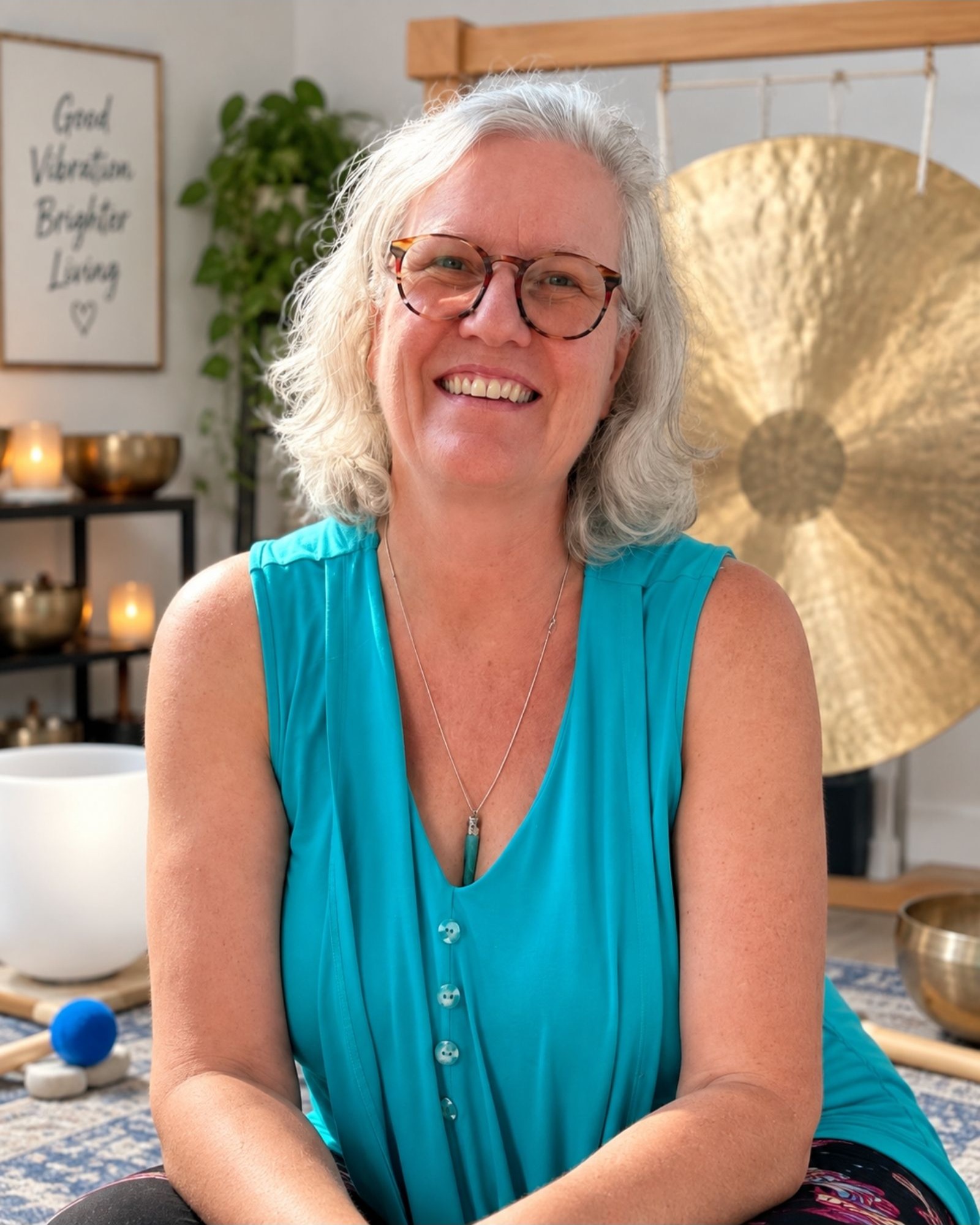
Cover guest Cheryl Butler discusses her transition from a 25-year accounting career to sound work, the instruments she plays, and the space she hopes to create for others.
In this October cover interview, Cheryl Butler traces her move from more than 25 years in accounting to sound, coaching, and energy work. She describes the instruments she plays and why listening closely to people matters in her practice.
<section>
<h2>You spent many years working as an accountant before creating Harmonic Balance Wellness. What led you from that very different career into the healing arts?</h2>
<p>I have always been someone who naturally wants to help others. Although I spent more than 25 years running an accounting practice, my work often went far beyond bookkeeping and taxes. My clients would open up to me about the challenges they were facing, and I found that I could support them in small but meaningful ways from across my desk. Having navigated many of life’s transitions myself, I was often able to relate to what they were experiencing on a deeper level.</p>
<p>My journey into the healing arts also began many years ago when I became a Reiki Master. I feel that I quietly carried that healing energy into my accounting practice, even before I recognized where it might eventually lead me. Over time, I knew I no longer wanted to spend my days sitting behind a desk, but I still wanted my work to be centred around helping people.</p>
<p>My husband is a musician, and a little over three years ago I discovered sound instruments and sound healing. I loved the way sound could create space for relaxation, reflection, and connection. Later, a friend who is also a registered massage therapist suggested that health coaching might be a natural fit for me. After researching it, I realized it offered the transition I had been looking for.</p>
<p>Today, I may no longer be sitting at a desk preparing tax returns, but I am still supporting people—now through coaching, sound, energy work, and all the skills, knowledge, and life experience I have gathered along the way.</p>
</section>
<section>
<h2>You have explored Reiki, aromatherapy, Touch for Health, BodyTalk, tuning forks and other healing modalities. What was it about sound therapy that resonated with you so deeply?</h2>
<p>Many of the healing modalities I explored allowed me to support someone one-to-one, which I found very meaningful. Sound therapy opened another possibility: I could create a healing experience for one person or hold space for an entire group at the same time.</p>
<p>Sound also allows me to be completely authentic. I play the instruments intuitively, and they feel like an extension of who I am. I begin with an intention and bring my understanding of energy, Reiki, and other healing practices into each journey—sound is what brings everything together for me.</p>
<p>As I learned more about the science of sound and how vibration can affect the body and nervous system, I became even more fascinated. Every time I strike a bowl or slowly roll my ocean drum, I feel the atmosphere shift. For a little while, the sound can transport both the people listening and me to a place of deeper stillness, connection, and renewal.</p>
</section>
<section>
<h2>For someone who has never experienced a sound-healing session, what does it actually feel like—and what might they notice during or after a session?</h2>
<p>A sound-healing session is a different experience for everyone, and there is no right or wrong way to receive it. Most people settle into a deeply relaxed, meditative state as the tones and vibrations from the bowls, gongs, drums, and chimes seem to move over, around, and sometimes even through the body. You may notice tingling, warmth, a sense of lightness, a slowing of your thoughts, or areas of tension beginning to soften.</p>
<p>Some people see colours, images, or memories, while others experience emotions rising and gently releasing. Some fall asleep, and others simply enjoy a rare opportunity to be still without needing to do anything. The vibrations can encourage the nervous system to settle, creating supportive conditions for the body’s natural restorative processes on physical, emotional, mental, and spiritual levels.</p>
<p>Afterward, people often describe feeling calmer, lighter, clearer, grounded, or more connected to themselves. They may sleep more deeply, feel more energized, or continue noticing subtle shifts over the next day or two. Even when the experience is quiet and nothing dramatic occurs, the pause itself can be deeply nourishing.</p>
</section>
<section>
<h2>There are so many instruments and frequencies used in sound work. Which instruments do you personally work with, and how do you decide what to use during a session?</h2>
<p>That is a difficult question because the short answer is: all of them! I love the unique sounds and qualities of so many instruments that I tend to bring a wide selection with me. My collection includes clear crystal bowls, many brass bowls, gongs, several kinds of chimes, and a variety of handheld drums. A few of my personal favourites are Koshi chimes, my tongue drum, quartzophone, 27-bar chimes, and 40-inch gong.</p>
<p>I choose what to play intuitively, guided by the season, the energy in the room, and the intentions set by the participants. I might begin with one instrument, gradually introduce a second, blend the two for a while, and then gently fade out the first so the new sound can take the lead. In this way, the session becomes a flowing conversation between the instruments rather than a fixed performance.</p>
<p>Over time, I have also learned which sounds tend to complement one another. For example, a crystal bowl may blend beautifully with a gong, while certain crystal and brass bowls may compete with each other—although every instrument has its exceptions. I listen carefully in the moment and allow the sounds themselves to guide what comes next, so no two sessions are ever exactly alike.</p>
</section>
<section>
<h2>Was there a particular experience with sound therapy when you realized, “This is what I'm meant to do”?</h2>
<p>I don’t think there was one single moment—it was more like a series of experiences gently leading me in this direction.</p>
<p>The first happened while I was shopping with a girlfriend in a charming little store on Vancouver Island. We came across a large frosted crystal bowl, and my eyes immediately lit up. I asked if I could try to make it sing, and when I did, the sound was beautiful. My friend said, “You should do something with sound,” and I laughed at the idea—but clearly, a seed had been planted.</p>
<p>Later, someone suggested that I explore tuning forks, so I attended a weekend training. I loved watching someone arrive carrying tension and then leave looking deeply relaxed. It gave me that wonderful feeling of, “I can do this. I can help people in this way.” Unfortunately, the weighted tuning forks caused my hands to cramp—it was hurting me to help others—so I knew they weren’t going to be my primary tools.</p>
<p>Then I saw a Facebook advertisement for a sound-practitioner training coming to my area. The instructor was surrounded by all kinds of fascinating instruments, and I was completely enthralled. Many local practitioners were working mainly with frosted crystal bowls, but I wanted to explore a wider variety of sounds and create something that felt uniquely my own. I attended the first weekend training and was immediately hooked. That led to several more trainings, and I loved every moment of them. I may not have had one dramatic realization, but each experience brought me closer to knowing: this is where I am meant to be.</p>
</section>
<section>
<h2>You have carried the belief since childhood that you may not be able to save the world, but you can help one person at a time. How has that philosophy shaped the practitioner you are today?</h2>
<p>That philosophy remains at the heart of everything I do. I may not be able to help the whole world at once, but I can be fully present for the person in front of me. I take time to truly hear my clients—to listen beneath the words to their worries, fears, needs, and hopes—without trying to rush or fix them.</p>
<p>From there, I ask Spirit to guide me and allow my intuition to lead. I am often able to sense what another person is feeling, and when I do, I gently acknowledge and work with those feelings within myself. By grounding and bringing healing attention to what I am experiencing, I can hold a calmer, more supportive space for that person’s own healing.</p>
<p>I believe helping one person is never just helping one person. When someone feels heard, supported, and more connected to themselves, they carry that energy into their families, friendships, and communities. They may then be able to support someone else, creating a ripple effect. In that sense, helping one person at a time really is my way of helping the world.</p>
</section>
<section>
<h2>What does "Shift Happens. Create Magic." mean to you?</h2>
<p>To me, “Shift Happens. Create Magic.” means that change is an inevitable part of life. Sometimes a shift begins with a single thought or realization; at other times, it comes through a major life transition that changes everything we thought we knew.</p>
<p>We may not always be able to choose what happens, but we can choose how we meet it. When we pause, become curious, and allow ourselves to see new possibilities, even a difficult transition can open the door to growth, joy, and unexpected opportunities. That is where the magic begins.</p>
<p>“Creating magic” doesn’t mean pretending that life is perfect. It means bringing intention, hope, and a sense of wonder into the moment we are in. When I look for the magic in my world, my energy shifts—and life begins to unfold in a more meaningful and beautiful way.</p>
</section>
<section>
<h2>What advice would you give someone who's afraid to take the first step?</h2>
<p>My advice is simple: gently give yourself permission to take that first step. It is natural to feel uncertain about something you have never experienced—you don’t know what you don’t know until you allow yourself to try.</p>
<p>There is growing research into how sound and vibration may support relaxation, stress reduction, and overall well-being, along with many personal stories from people who have found sound journeys deeply beneficial. Still, the experience is individual. If you spend an hour resting and listening and decide it isn’t for you, that is perfectly okay. You have still given yourself something valuable: time to pause, breathe, and simply be.</p>
<p>In my experience, many people who attend one sound journey are eager to return. There is something beautiful about setting aside the demands of everyday life, honouring yourself, and allowing yourself to receive rest and renewal—whatever that may look like for you.</p>
</section>
<section>
<h2>What daily habit has had the greatest impact on your success?</h2>
<p>The daily habit that has had the greatest impact on my success is intentionally caring for my energy. I believe that how I begin my morning influences at least 80 percent of how the rest of my day unfolds. Eating nourishing food, moving my body, learning something new, and setting a clear intention help me feel grounded, focused, and ready for whatever the day may bring.</p>
<p>An important part of that routine is what I think of as my daily gratitude prescription. I ask myself: What evidence shows that I am already aligning with greater abundance? What five things am I grateful for? What do I appreciate about my life today, and what feeling do I want to carry through the day?</p>
<p>I then shift from reflection into action by identifying five things I can do that day to welcome greater prosperity into my life. Finally, I leave room for possibility by asking, “What is something wonderful that could manifest today?” and, even more playfully, “What is something absolutely fun and amazing that could happen in my life?”</p>
<p>Then I smile and say, “Thank you.” This practice helps me begin each day with gratitude for what I already have, clear intention for what I can create, and openness to the unexpected joy that may be waiting for me.</p>
</section>
<section>
<h2>What inspires you every day?</h2>
<p>What inspires me each day is the possibility that I might make a difference in someone’s life—even in a small way. It could be helping someone feel heard, encouraging them to take one healthy step, or creating a moment in which they can finally breathe, soften, and reconnect with themselves.</p>
<p>I begin my day by creating that sense of connection within myself. My morning routine includes Tai Chi, a nourishing breakfast, and sometimes standing inside my large brass foot bowl while I play it. Feeling those vibrations move through my body grounds me, lifts my energy, and reminds me why I love this work so much.</p>
<p>From there, I feel excited to carry that positive energy into the rest of my day and share it with others. I never know whose path I may cross, what they may be carrying, or how a kind word, a listening ear, a coaching conversation, or a sound experience might affect them. That possibility inspires me to keep learning, growing, and showing up with an open heart. I’m smiling right now just thinking about it—and I hope that joy is something others can feel when they are with me.</p>
</section>
<section>
<h2>When life becomes overwhelming, how do you personally reset?</h2>
<p>When life becomes overwhelming, my first step is to stop. I give myself permission to step away from the noise, the demands, and the need to keep doing, and I create some quiet space for myself.</p>
<p>What that looks like can change from day to day. I might turn off the television and enjoy the silence, read a book, take a walk alone, listen to a podcast, or simply sit and gently play my bowls for myself. Sometimes I need complete quiet; other times, I need something calming that gives my mind a place to rest. These small pauses help me slow down, breathe, and find my centre again.</p>
<p>I also lean on my close circle of friends. I believe it is so important to have a tribe or community you can turn to—people who will listen, support you, and remind you that you don’t have to carry everything alone. The support goes both ways: I lean on them, and they lean on me. For me, resetting is about finding a balance between peaceful time alone and meaningful connection with the people who help me feel grounded.</p>
</section>
<section>
<h2>If every reader remembered just one thing from this conversation, what would you hope it would be?</h2>
<p>I hope readers remember that caring for themselves is not selfish—it is essential. Make intentional choices each day that support your well-being, and seek out the people, practices, and experiences that bring you joy and nourish your soul.</p>
<p>A sound journey is just one moment within your much larger personal journey, but one intentional moment can create a meaningful shift. Give yourself permission to pause, breathe, and receive. You may be surprised by how much brighter, calmer, or more connected the rest of your day can feel simply because you chose to take that moment for yourself.</p>
</section>
I play the instruments intuitively, and they feel like an extension of who I am.
Cheryl Butler’s path from accounting to sound work has been shaped by a commitment to listening and meeting people where they are. Her experiences are her own, and no sound session works the same way for everyone. If this conversation leaves you curious, start with questions, choose what feels comfortable, and take the next step at your own pace.