Issue #4: The Strength Within · Archived Issue
Free article
Understanding Prostate Health
What every man should know about changes, symptoms, screening, and when to talk with a healthcare professional
By Dr. Constance Santego
What every man should know about changes, symptoms, screening, and when to talk with a healthcare professional.
Men often pay attention to strength, stamina, weight, heart health, or blood pressure long before they think about the prostate.
Yet prostate health can become increasingly relevant with age, and changes involving urination, pelvic comfort, or sexual function deserve attention rather than embarrassment.
Men often pay attention to strength, stamina, weight, heart health, or blood pressure long before they think about the prostate.
Yet prostate health can become increasingly relevant with age, and changes involving urination, pelvic comfort, or sexual function deserve attention rather than embarrassment.
The goal is not to make every symptom frightening. Many prostate-related changes are not cancer. The goal is to understand the prostate well enough to recognize when something has changed and know when it is worth having a conversation with a healthcare professional.
## First: What Is the Prostate?
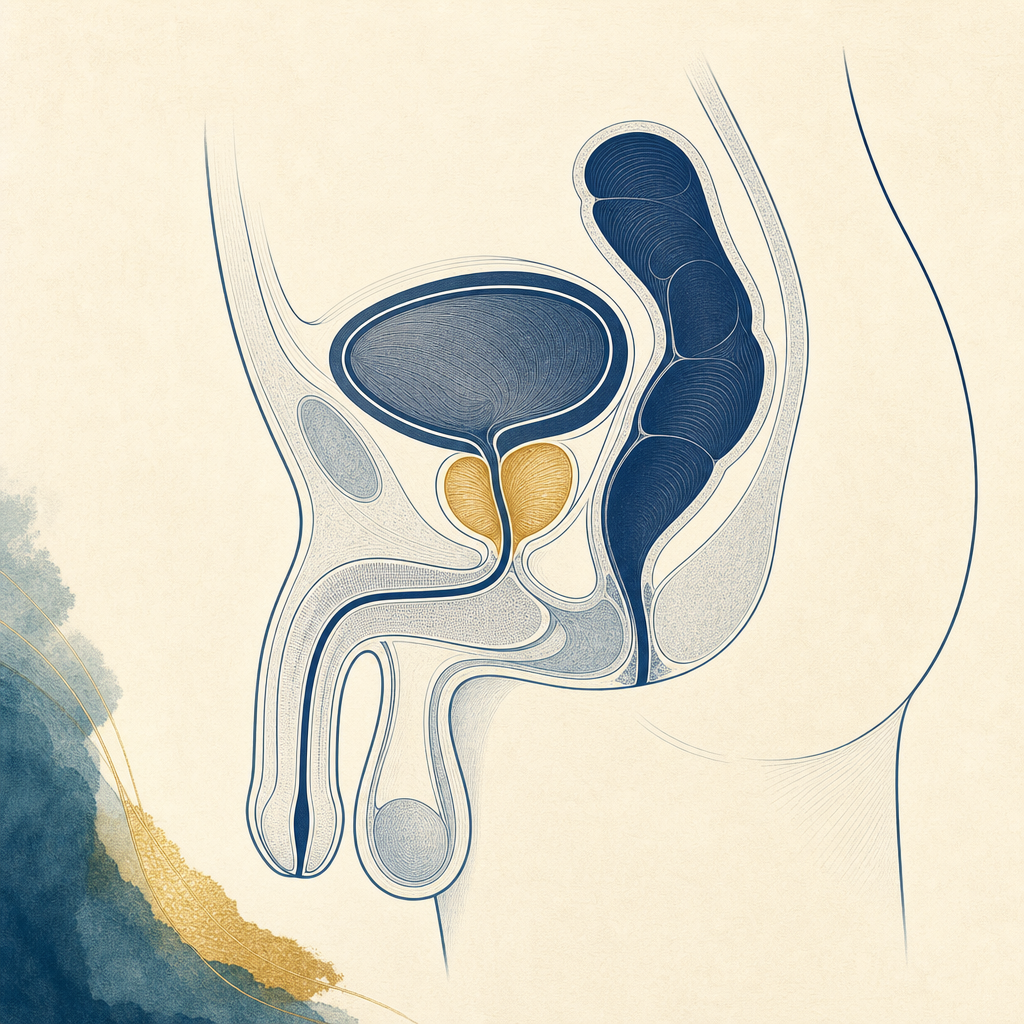
The prostate is a small gland located below the bladder and in front of the rectum. The urethra—the tube that carries urine out of the body—passes through the prostate.
The prostate contributes fluid to semen.
Because of where it is located, changes in the size or condition of the prostate can sometimes affect urination.
## Three Prostate Conditions Men Often Hear About
### Benign Prostatic Hyperplasia — BPH
BPH means non-cancerous enlargement of the prostate. It becomes more common with aging.
An enlarged prostate can put pressure on the urethra and contribute to urinary symptoms such as a weaker stream, difficulty starting urination, frequent urination, nighttime urination, or a feeling that the bladder has not fully emptied. BPH is not prostate cancer.
### Prostatitis
Prostatitis involves inflammation or infection of the prostate. It may be acute, with symptoms that begin suddenly, or chronic, with symptoms that develop more gradually.
Possible symptoms can include painful or burning urination, urinary frequency, difficulty starting the urine stream, pelvic or lower-back discomfort, and pain during or after ejaculation. Acute prostatitis may also involve fever and chills and needs prompt medical attention.
### Prostate Cancer
Prostate cancer is different from both BPH and prostatitis. Because early prostate cancer may not necessarily cause obvious symptoms, conversations about personal risk and appropriate screening can be important.
Do not assume that urinary changes mean cancer—but do not ignore persistent changes either.
## Changes Worth Talking About
A man should consider discussing new or persistent urinary or pelvic symptoms with a healthcare professional, especially:
difficulty beginning urination
a weaker-than-usual urine stream
frequent urination
regularly waking during the night to urinate
feeling that the bladder has not emptied
burning or pain with urination
blood in the urine
persistent pelvic, genital, or lower-back discomfort
pain with ejaculation
recurring urinary infections
These symptoms can have several possible causes. They are reasons to investigate, not reasons to panic.
## What About PSA Testing?
PSA stands for prostate-specific antigen. A PSA test measures the amount of PSA in the blood.
PSA testing can be part of prostate-cancer screening, but it is not simply a “cancer yes-or-no” test. PSA levels can be affected by several prostate conditions, and screening decisions need to consider factors such as age, individual risk, family history, previous results, and the potential benefits and drawbacks of further testing.
Rather than giving every reader one universal screening rule, the better question is:
“Based on my age and personal risk factors, should I be discussing prostate screening with my healthcare provider?”
## Family History Matters
Men should know whether prostate cancer has occurred in close relatives and share that information with their healthcare provider.
Family history is one piece of a larger personal-risk picture and may affect conversations about screening and follow-up.
## Prostate Health Is Part of Whole-Person Health
There is no single food, herb, supplement, exercise, or wellness practice that guarantees prostate health.
What does matter is not neglecting overall health.
Regular physical activity, balanced nutrition, adequate sleep, maintaining a healthy weight, managing chronic health conditions, avoiding tobacco, moderating alcohol, and having routine healthcare conversations all contribute to the bigger picture of men's health.
And perhaps just as importantly: pay attention to changes.
Men sometimes normalize symptoms for years because they assume they are “just getting older.”
Aging certainly brings change. But common does not automatically mean something should be ignored.
## A Simple Prostate Check-In
Ask yourself:
Has anything changed about how often I urinate?
Has my urine stream changed?
Am I waking much more often during the night?
Do I have pain, pressure, burning, or discomfort that is new?
Have I been avoiding mentioning a symptom because it feels embarrassing?
Do I know my family history of prostate cancer?
When was the last time I discussed prostate health with a healthcare professional?
You do not need to diagnose yourself.
You simply need to notice.
## When Not to Wait
Sudden fever and chills together with significant urinary symptoms can be associated with acute prostatitis and warrant prompt medical assessment.
Likewise, inability to urinate, significant bleeding, severe pain, or rapidly worsening symptoms should not be treated as a routine wellness concern.
## The Strength in Paying Attention
For some men, strength has been taught as endurance:
Work through it.
Don't complain.
Give it time.
It will probably go away.
But taking care of your health requires a different kind of strength.
It means noticing when something changes.
It means asking questions before a problem becomes impossible to ignore.
And it means understanding that seeking information or medical care is not an admission of weakness.
It is participation in your own health.
The strongest thing you can do for your body may simply be to pay attention to what it has been trying to tell you.
## Medical Disclaimer
This article is provided for general educational purposes only and is not intended to diagnose, treat, cure, or prevent any medical condition. Prostate symptoms can have many causes. Speak with a qualified healthcare professional about symptoms, personal risk factors, screening decisions, or concerns specific to your health.
The strongest thing you can do for your body may simply be to pay attention to what it has been trying to tell you.